In the family’s tests: measured by an independent lab and compared against published safety limits.
Di(2-ethylhexyl) Phthalate (DEHP)11 ppbof 6 ppb
Over the limit — 1.8×US EPA drinking-water MCL, 40 CFR 141.61(c) — 0.006 mg/L. Applied to all foods as the TIGHTEST published DEHP number; the EU food-contact limit is looser (Reg. (EU) 10/2011 as amended by 2023/1442: SML 0.6 mg/kg, plus the 0.6 mg/kg DEHP-equivalent group limit with DBP/BBP/DIBP).
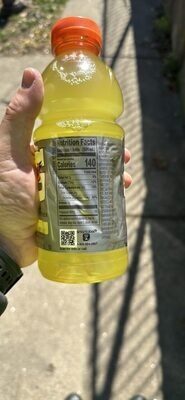
Measured in: Cool Blue Thirst Quencher
Dimethylphthalate6.23 ppbof 10 ppb
62% of the limitDMP is not on the EU Union list of substances authorised in food-contact plastics (Reg. (EU) 10/2011 Annex I), so no migration is permitted. Set at 0.01 mg/kg, the detection limit 10/2011 uses for not-detectable (ND) restrictions.
Measured in: Cool Blue Thirst Quencher
Dibutyl Phthalate15.3 ppbof 120 ppb
13% of the limitEU food-contact plastics, Reg. (EU) 10/2011 as amended by 2023/1442 — DBP SML 0.12 mg/kg (cut from 0.3). Also inside the 0.6 mg/kg DEHP-equivalent group limit (DBP x5).
Measured in: Cool Blue Thirst Quencher
Di (2-ethylhexyl) Terephthalate0.0457 ppmof 60 ppm
<1% of the limitEU food-contact plastics, Reg. (EU) 10/2011 — DEHT (FCM 798) SML 60 mg/kg, group restriction with DINCH. No tighter published limit exists (EFSA TDI 1 mg/kg bw/day).
Measured in: Cool Blue Thirst Quencher
Benzylbutyl PhthalateNDof 6 ppm
Not detectedEU food-contact plastics, Reg. (EU) 10/2011 as amended by 2023/1442 — BBP SML 6 mg/kg (cut from 30). Also inside the 0.6 mg/kg DEHP-equivalent group limit (BBP x0.1 = 6 mg/kg alone).
Measured in: Cool Blue Thirst Quencher
Bisphenol a (BPA)NDof 1 ppb
Not detectedEU Reg. (EU) 2024/3190 — BPA banned in food-contact materials from 20 Jan 2025 (old 0.05 mg/kg SML repealed); the residual exemptions require NO detectable migration at a 1 ug/kg detection limit. 1 ppb is therefore the tightest published number.
Measured in: Cool Blue Thirst Quencher
BpfNDof 10 ppb
Not detectedNot on the EU Union list of substances authorised in food-contact plastics (Reg. (EU) 10/2011 Annex I), and Reg. 2024/3190 restricts hazardous bisphenols; no migration is permitted. Set at 0.01 mg/kg, the detection limit 10/2011 uses for not-detectable (ND) restrictions.
Measured in: Cool Blue Thirst Quencher
BPS (Bisphenol s)NDof 50 ppb
Not detectedEU food-contact plastics, Reg. (EU) 10/2011 — BPS (4,4'-sulphonyldiphenol) SML 0.05 mg/kg; BfR applies the same 0.05 mg/kg.
Measured in: Cool Blue Thirst Quencher
Di-n-octyl PhthalateNDof 10 ppb
Not detectedDNOP is not on the EU Union list of substances authorised in food-contact plastics (Reg. (EU) 10/2011 Annex I), so no migration is permitted. Set at 0.01 mg/kg, the detection limit 10/2011 uses for not-detectable (ND) restrictions.
Measured in: Cool Blue Thirst Quencher
Dicyclohexyl PhthalateNDof 10 ppb
Not detectedDCHP is not on the EU Union list of substances authorised in food-contact plastics (Reg. (EU) 10/2011 Annex I), so no migration is permitted. Set at 0.01 mg/kg, the detection limit 10/2011 uses for not-detectable (ND) restrictions.
Measured in: Cool Blue Thirst Quencher
Diethylhexyl AdipateNDof 18 ppm
Not detectedEU food-contact plastics, Reg. (EU) 10/2011 — DEHA (FCM 207) SML 18 mg/kg.
Measured in: Cool Blue Thirst Quencher
DiethylphthalateNDof 10 ppb
Not detectedDEP is not on the EU Union list of substances authorised in food-contact plastics (Reg. (EU) 10/2011 Annex I), so no migration is permitted. Set at 0.01 mg/kg, the detection limit 10/2011 uses for not-detectable (ND) restrictions.
Measured in: Cool Blue Thirst Quencher
Dihexyl PhthalateNDof 10 ppb
Not detectedDNHP (di-n-hexyl phthalate, EU Repr. 1B) is not on the EU Union list of substances authorised in food-contact plastics (Reg. (EU) 10/2011 Annex I), so no migration is permitted. Set at 0.01 mg/kg, the detection limit 10/2011 uses for not-detectable (ND) restrictions.
Measured in: Cool Blue Thirst Quencher
Diisobutyl PhthalateNDof 150 ppb
Not detectedEU food-contact plastics, Reg. (EU) 2023/1442 group restriction — DBP x5 + DIBP x4 + BBP x0.1 + DEHP <= 0.6 mg/kg DEHP-equivalents, so DIBP alone may not exceed 0.15 mg/kg. DIBP is not itself an authorised substance.
Measured in: Cool Blue Thirst Quencher
Diisodecyl AdipateNDof 10 ppb
Not detectedDIDA (diisodecyl adipate) is not on the EU Union list of substances authorised in food-contact plastics (Reg. (EU) 10/2011 Annex I), so no migration is permitted. Set at 0.01 mg/kg, the detection limit 10/2011 uses for not-detectable (ND) restrictions.
Measured in: Cool Blue Thirst Quencher
Diisodecyl PhthalateNDof 1.8 ppm
Not detectedEU food-contact plastics, Reg. (EU) 10/2011 as amended by 2023/1442 — DINP+DIDP group SML 1.8 mg/kg (sum). Applied to each alone.
Measured in: Cool Blue Thirst Quencher
Diisononyl 1,2-cyclohexanedicarboxylic AcidNDof 60 ppm
Not detectedEU food-contact plastics, Reg. (EU) 10/2011 — DINCH (FCM 775) group restriction with DEHT, 60 mg/kg. No tighter published limit exists (EFSA TDI 1 mg/kg bw/day).
Measured in: Cool Blue Thirst Quencher
Diisononyl ortho PhthalateNDof 1.8 ppm
Not detectedEU food-contact plastics, Reg. (EU) 10/2011 as amended by 2023/1442 — DINP+DIDP group SML 1.8 mg/kg (sum). Applied to each alone.
Measured in: Cool Blue Thirst Quencher