
China rejected a container of Argentine beef. Here's what the US did next, and what the label won't tell you
China rejected a 22-tonne Argentine beef shipment over a banned antibiotic in March. Here's what Trump's quota actually changed, the 29,628 lb recall nobody covered, and why the package won't tell you.

Emily Harper
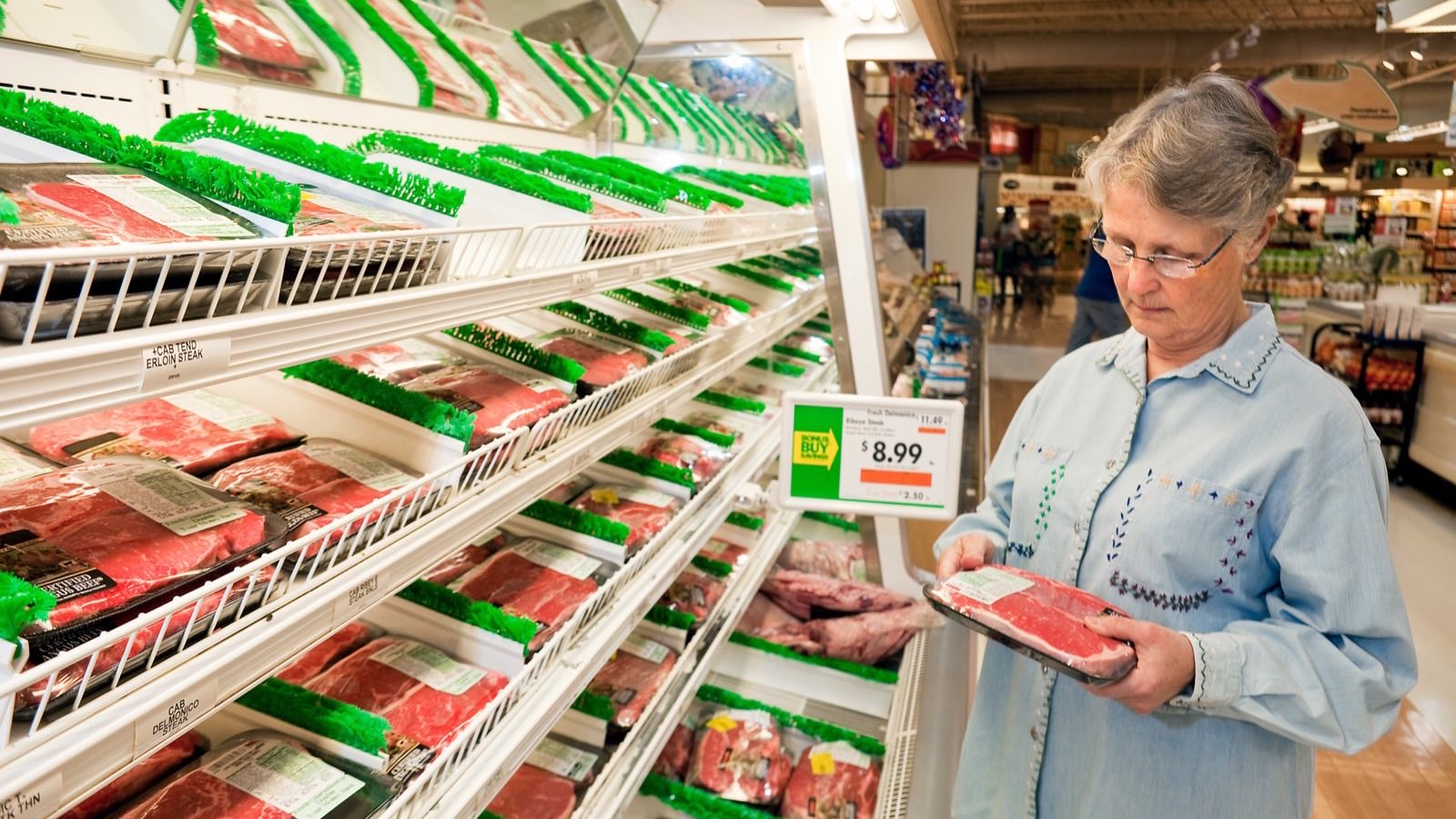
On March 19, 2026, Chinese customs officers stopped a 22-tonne container of Argentine beef at the border and sent it back. The lab had found chloramphenicol, an antibiotic that has been illegal in food animals in Argentina since 1995 and that the FDA lists in 21 CFR 530.41 as one of a short list of drugs flatly prohibited from extralabel use in food-producing animals in the United States.
Five months later the US widened the door for Argentine beef, and shoppers started asking the obvious question: is that the beef now heading here? Some of what's being said about it is right and some of it isn't. Here's the paper trail in order.
What China actually rejected
The shipment came from the ArreBeef plant in Pérez Millán, Buenos Aires province. It was roughly 22 tonnes, about 48,500 pounds, and China's General Administration of Customs rejected the whole container after detecting chloramphenicol residue, then suspended imports from that facility while it worked out what happened.
China's standard here is zero. There's no "acceptable level" of chloramphenicol in food, so any detectable trace is grounds for refusal. That's why one positive result turns into a rejected container instead of a fine.
The standard is zero because of what the drug does. Chloramphenicol can cause aplastic anemia, a bone-marrow failure that's rare, unpredictable, unrelated to dose, and frequently fatal. The IARC classified it as Group 2A, "probably carcinogenic to humans," in Volume 50 (1990), and the US National Toxicology Program's Report on Carcinogens lists it as reasonably anticipated to be a human carcinogen. It's still used in human medicine for a handful of severe infections where nothing else works. It's not supposed to be anywhere near a cow.
One thing cuts the other way, and it matters. Argentina's food safety agency, Senasa, ran a traceability protocol to reconstruct the batch back to the farms the animals came from. Inspectors reported no chloramphenicol-containing products, no possession of the drug, and no evidence of its use at the establishments they checked. Officials have publicly floated a false positive or a cross-reacting compound. ArreBeef called the result strange and raised the possibility the substance was planted, while conceding it couldn't say for certain. None of that has been settled publicly. And one rejected container isn't a finding about a country's entire beef supply. It's one plant, one lot, one test.
What the US actually changed
Two different things happened six months apart, and they keep getting merged into one story.
February 6, 2026 — the Argentina quota. A presidential proclamation temporarily added 80,000 metric tons of tariff-free access for Argentine beef, released in quarterly tranches of 20,000 tonnes and enterable between February 13 and December 31, 2026. That sits on top of Argentina's existing 20,000-tonne country quota, taking it to 100,000 tonnes for the year, five times the old level. The Congressional Research Service has a plain-English summary of the mechanics. The added volume is specifically lean beef trimmings, the input that gets blended into ground beef.
August 21, 2026 — the 300,000-tonne window. Trump announced on Truth Social that the US would suspend the out-of-quota tariff on up to 300,000 metric tons of beef for 90 days, with a stated expectation that it would retail around 25% below market. The proclamation directs USDA and USTR to monitor whether that discount actually shows up.
Argentina is not a named supplier of that 300,000-tonne window. Countries that already hold their own country-specific allocations, Argentina and Uruguay among them, are excluded from it. The new tonnage runs through the shared "other countries" line, which is why the trade press expects Brazil and Paraguay to take most of it.
So "Trump just opened the door to 300,000 tons of the beef China rejected" isn't accurate. What is accurate, and arguably worse, is that Argentina didn't need that door. It already had its own, and it was widened fivefold in February.
Why any of this is happening
It's a supply problem. The US cattle herd is at 86.2 million head, its lowest since 1951, after roughly eight years of drought and expensive credit gutted the breeding herd. BLS average-price data put fresh 100% ground beef at a record $6.885 a pound in July 2026. Rebuilding a cow herd takes years, and trade levers work in weeks.
The National Cattlemen's Beef Association was not pleased, arguing that flooding the market with below-market imported beef isn't how you rebuild an American herd. That's an industry group defending its members' prices, and it's also a fair point about incentives.
The 29,628 pounds that skipped inspection
While the argument was about hypothetical beef, a real shipment got recalled.
On August 11, 2026, FSIS announced that Corte Argentino USA LLC of Aventura, Florida was recalling 29,628 pounds of raw Argentine beef — top sirloin butt, eye round, topside cap off, flat and knuckle — produced by Frigorifico Gorina SAIC in Argentina between May 15 and May 20, 2026. The reason wasn't a pathogen. The product had entered the United States without import re-inspection, and the gap was caught during routine inspection activity months later. FSIS gave it a Class I designation, its highest, and reported no confirmed illnesses.
Imported meat is supposed to be re-inspected at an approved facility at the port of entry. FSIS is explicit that the system is risk-weighted rather than exhaustive: reinspection is "performance-based in that better performing foreign establishments have their products reinspected less frequently," and an annual import residue plan sets each country's initial sampling rate based on export volume. Chemical residues specifically are caught by random sampling under the National Residue Program, not by testing every lot. That same FSIS overview puts staffing at "about 65 FSIS inspectors" across "approximately 150 official import establishments."
It's a sampling system, not a wall. In this case about 30,000 pounds skipped it entirely, reached retail and food service in two states, and the miss surfaced on a paperwork review months later.
What the label will and won't tell you
For beef, the package usually won't tell you where the animal was raised.
Congress repealed mandatory country-of-origin labeling for beef and pork on December 18, 2015, after Canada and Mexico won a WTO case and threatened over $1 billion in retaliatory tariffs. Since then there's been no legal requirement that a package of ground beef name the country the animal came from.
One thing did improve, and it's new. USDA's voluntary "Product of USA" rule became enforceable on January 1, 2026. A package may only say "Product of USA" or "Made in the USA" if the animal was born, raised, slaughtered and processed in the United States, and the establishment has to keep documentation FSIS can inspect. Before this, imported beef that was merely repackaged here could legally carry that claim.
So the label now means what you thought it meant, but only if it's there. It's voluntary. No label is not a claim of foreign origin, just an absence.
| What the package says | What it is allowed to mean |
|---|---|
| "Product of USA" / "Made in the USA" | Born, raised, slaughtered and processed in the US, with records FSIS can audit (enforceable since Jan 1, 2026) |
| "Processed in the USA" / "Prepared in the USA" | The last step happened here. Says nothing about where the animal was raised |
| No origin claim at all | Nothing either way. Not a disclosure, just an absence |
What actually works at the counter
- "Product of USA" is now a documented claim. As of January 2026 it means born, raised, slaughtered and processed here, with paperwork behind it. Read it as meaningful. Read "Processed in the USA," "Prepared in the USA," or plain silence as telling you nothing about where the animal lived.
- Ground beef is the blend product. Whole muscle cuts tend to keep their identity. Ground beef is where lean imported trimmings get mixed with domestic fat, and that's exactly the category the Argentine quota expansion targets. If origin matters to you, that's the item to be picky about.
- Buying direct sidesteps the question entirely. A local butcher or a farm you can name answers origin without depending on a label rule.
Let us do the other half
Origin is one question about a package of meat. What's inside it is the other, and that one takes about two seconds.
Point Tallow at the barcode. We read the panel, score the product out of 100, and say in plain English what every additive is doing. Real ground beef is one ingredient, so a clean package scores 100. Hillshire Farm's beef smoked sausage, Ball Park's flame-grilled patty and Parkview's uncured beef franks each score a 5.
We tell you where the beef is from, too. The sourcing a label carries — grass-fed, pasture-raised, wild-caught, organic — comes through attached to the ingredient itself instead of getting trimmed off as marketing, because it changes the score.
Or skip the scanning: open Meat & Seafood and fresh meat comes ranked by score, with Simple Truth Organic grass-fed, Wegmans organic grass-fed, ORGANIC RANCHER, Pre and Sprouts' 85/15 all at 100.
Download Tallow and scan the next package of beef you pick up.
Figures, dates and quotes in this post come from the government notices, trade filings, agency pages and press coverage linked above, current as of publication. The Senasa investigation into the March rejection was still open at the time of writing.